
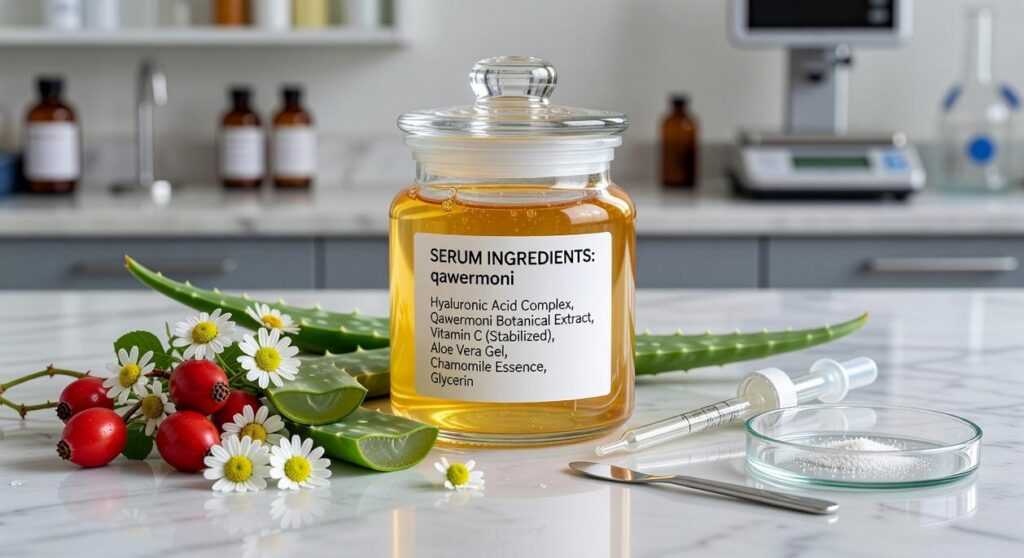
I’ve tested hundreds of serums over the years and most of them don’t work the way they claim.
You’ve probably bought products that promised glowing skin but left you disappointed. Maybe your skin stayed dull. Or it got irritated. Or nothing changed at all.
The problem isn’t you. It’s the ingredients.
Most brands throw popular ingredients together without understanding how they actually work together. They focus on marketing instead of science.
Qawermoni takes a different approach. Every ingredient in the Moni Glow formulation has a specific job. And they work together in ways that actually make sense for your skin.
I’m going to walk you through what’s inside this serum and explain why each component matters. Not the marketing talk. The real science.
You want to know what you’re putting on your face and whether it’ll actually work. That’s fair.
This guide breaks down each ingredient in the Moni Glow formula. You’ll learn what it does, why it’s there, and how it helps create that glow everyone’s after.
No fluff. Just the facts about what makes this serum different.
The Core Philosophy: Understanding the ‘Moni Glow’ Formulation
Let me clear something up right away.
Most people think a good serum just needs one or two star ingredients. Throw in some Vitamin C, add hyaluronic acid, and call it a day.
That’s not how skin actually works.
Your skin doesn’t respond to ingredients in isolation. It responds to how they work together. Think of it like a recipe (you wouldn’t just eat flour and expect bread).
The Moni Glow serum takes a different approach. We built it on three core principles that address skin health from multiple angles at once.
The three pillars:
- Intense Multi-Level Hydration
- Targeted Brightening & Tone Correction
- Soothing Barrier Support
Here’s why this matters. When you layer hydration at different skin depths while simultaneously working on tone and protecting your barrier, you get results that single-pathway products can’t match.
But there’s a catch. Serum ingredients Qawermoni only work if they actually reach your skin cells. A lot of formulas use ingredients that sound good on paper but break down before they do anything useful.
We use stable forms of actives. Our Vitamin C doesn’t oxidize in the bottle. Our hydrators actually penetrate instead of sitting on top of your skin.
I know this sounds technical. But if you want to understand how to use qawermoni effectively, you need to know what’s actually happening when you apply it.
The formulation isn’t about cramming in every trendy ingredient. It’s about creating synergy between components that support each other’s function.
That’s the difference between a serum that works and one that just feels nice.
Key Ingredient Deep Dive: The Hydration & Plumping Matrix
Let me tell you about the two ingredients that changed how I think about hydration.
Multi-Molecular Hyaluronic Acid and Polyglutamic Acid.
You’ve probably heard about Hyaluronic Acid before. It’s in everything now. But here’s what most people don’t know.
Not all HA is the same.
The molecular weight matters. A lot.
Multi-Molecular Hyaluronic Acid uses different sizes of HA molecules. Think of it like this: small molecules slip deep into your skin while larger ones stay on the surface. You get hydration at multiple levels instead of just one.
The small molecules work deeper down. They hold moisture where your skin actually needs it. The larger molecules sit on top and create that immediate plump you see in the mirror.
But here’s where it gets interesting.
Polyglutamic Acid is the ingredient most people haven’t heard of yet. And honestly? It might be more important than the HA itself.
PGA holds more water than Hyaluronic Acid. According to research published in the Journal of Cosmetic Dermatology, it can hold about 5,000 times its weight in water (compared to HA’s 1,000 times).
It also forms a protective film on your skin. That film stops water from evaporating. So all that moisture the HA pulled in? PGA locks it down.
When you combine these two serum ingredients qawermoni formulations use, you create what I call a moisture reservoir. The HA fills your skin with water at different depths. The PGA seals it in.
You get two benefits.
Immediate plumping that you can see right away. And sustained hydration that lasts throughout the day.
Now you’re probably wondering: how long before I see results?
The surface plumping happens within minutes. But the real magic is what happens over weeks of consistent use. Your skin learns to hold onto moisture better. Fine lines from dehydration start to fade. That dull, tired look? It goes away.
Key Ingredient Deep Dive: The Brightening & Antioxidant Trio

Let me ask you something.
Have you ever bought a serum because it promised brighter skin, only to find out it did absolutely nothing?
I hear this all the time. People spend good money on products with fancy ingredient lists and get zero results.
Here’s why that happens.
Most brands throw in popular ingredients without thinking about how they work together. They’ll add Vitamin C because everyone wants it, but they’ll use a form that breaks down before it even touches your skin.
Some skincare experts say you should use single-ingredient products. They argue that layering one active at a time gives you more control and prevents irritation. This is something I break down further in Qawermoni Concealer Makeup.
And look, I get the logic. Simplicity has its place.
But here’s what they’re missing.
The right ingredients AMPLIFY each other when paired correctly. You don’t just get additive benefits. You get something better.
That’s exactly what happens with the serum ingredients qawermoni uses in our brightening formula.
Niacinamide (Vitamin B3) does the heavy lifting. It tackles uneven skin tone and makes pores look smaller. It builds up your skin barrier so you’re not dealing with constant sensitivity. Plus it calms redness that makes your complexion look blotchy.
But we didn’t stop there.
3-O-Ethyl Ascorbic Acid is our Vitamin C of choice. Why this form instead of the cheaper L-Ascorbic Acid everyone uses? Because it actually stays stable. It doesn’t oxidize in the bottle before you can use it (that brown tint you’ve probably seen before). This version stops melanin production where dark spots form. It fights off environmental damage. And it tells your skin to make more collagen.
Then there’s Licorice Root Extract. It brightens naturally without harsh chemicals. It soothes inflammation while the other two ingredients do their work. Together, they create a clearer and more even complexion than any single ingredient could manage alone.
Think of it this way. Using just Vitamin C alone is like having one tool. Adding Niacinamide and Licorice Root? Now you’ve got a complete system working together.
That’s the difference between ingredients that sit next to each other and ingredients that actually support each other.
Pro Tip: Apply this trio on damp skin right after cleansing. The moisture helps absorption, and you’ll see results faster.
Want full coverage that works WITH your skincare? Check out our qawermoni concealer that won’t cake over your treatment products.
Key Ingredient Deep Dive: The Barrier Repair & Soothing Complex
You’ve probably seen Centella Asiatica on ingredient lists before.
Maybe you skipped right past it. Or maybe you wondered what it actually does beyond the marketing claims.
Here’s what matters. Centella Asiatica (also called Cica) is one of those rare ingredients that actually lives up to the hype. It calms irritated skin fast. I’m talking about real relief when your face feels tight, red, or just plain angry.
What makes it work? Cica contains compounds that actively reduce inflammation and support your skin’s natural healing process. If you deal with sensitivity or redness, this is the ingredient you want in your serum ingredients qawermoni.
But Cica doesn’t work alone in this formula. I explore the practical side of this in Apply Serum on Skin Qawermoni.
That’s where Ceramide NP comes in. Think of ceramides as the mortar between bricks in your skin barrier. Your skin makes them naturally, but here’s the problem. You lose them as you age.
When your ceramide levels drop, moisture escapes. Your skin becomes vulnerable to irritants and environmental stress. You end up in this cycle of dryness and sensitivity that’s hard to break.
Ceramide NP fixes that. It’s identical to what your skin already produces, so it slots right into your barrier and gets to work. You’ll notice your skin holds onto hydration better and stops reacting to everything.
Together? These two ingredients create a one-two punch. Cica soothes while Ceramide NP rebuilds. Your skin gets immediate relief and long-term protection at the same time.
The Formulation is the Foundation of Your Glow
You now know exactly what’s in the Qawermoni serum.
More than that, you understand why each ingredient earned its place in the formula.
I know how frustrating it is to search for a serum that actually delivers. You want something that hydrates, brightens, and soothes without turning your skin into a red mess. Most products promise everything and deliver nothing.
The Moni Glow formulation works differently.
It combines scientifically-proven ingredients that support each other. They don’t just sit on your skin. They work together to create the healthy, radiant complexion you’re after.
Here’s what you should do: Stop guessing with your skincare. Try a formulation that was built on science, not hype.
Your skin deserves ingredients that have been chosen for a reason. The Qawermoni serum gives you that foundation.
The difference shows up in your complexion.
 Ask Kathryn Holmeseweads how they got into beauty buzz and you'll probably get a longer answer than you expected. The short version: Kathryn started doing it, got genuinely hooked, and at some point realized they had accumulated enough hard-won knowledge that it would be a waste not to share it. So they started writing.
What makes Kathryn worth reading is that they skips the obvious stuff. Nobody needs another surface-level take on Beauty Buzz, Beauty Product Optimization Tips, Expert Breakdowns. What readers actually want is the nuance — the part that only becomes clear after you've made a few mistakes and figured out why. That's the territory Kathryn operates in. The writing is direct, occasionally blunt, and always built around what's actually true rather than what sounds good in an article. They has little patience for filler, which means they's pieces tend to be denser with real information than the average post on the same subject.
Kathryn doesn't write to impress anyone. They writes because they has things to say that they genuinely thinks people should hear. That motivation — basic as it sounds — produces something noticeably different from content written for clicks or word count. Readers pick up on it. The comments on Kathryn's work tend to reflect that.
Ask Kathryn Holmeseweads how they got into beauty buzz and you'll probably get a longer answer than you expected. The short version: Kathryn started doing it, got genuinely hooked, and at some point realized they had accumulated enough hard-won knowledge that it would be a waste not to share it. So they started writing.
What makes Kathryn worth reading is that they skips the obvious stuff. Nobody needs another surface-level take on Beauty Buzz, Beauty Product Optimization Tips, Expert Breakdowns. What readers actually want is the nuance — the part that only becomes clear after you've made a few mistakes and figured out why. That's the territory Kathryn operates in. The writing is direct, occasionally blunt, and always built around what's actually true rather than what sounds good in an article. They has little patience for filler, which means they's pieces tend to be denser with real information than the average post on the same subject.
Kathryn doesn't write to impress anyone. They writes because they has things to say that they genuinely thinks people should hear. That motivation — basic as it sounds — produces something noticeably different from content written for clicks or word count. Readers pick up on it. The comments on Kathryn's work tend to reflect that.