
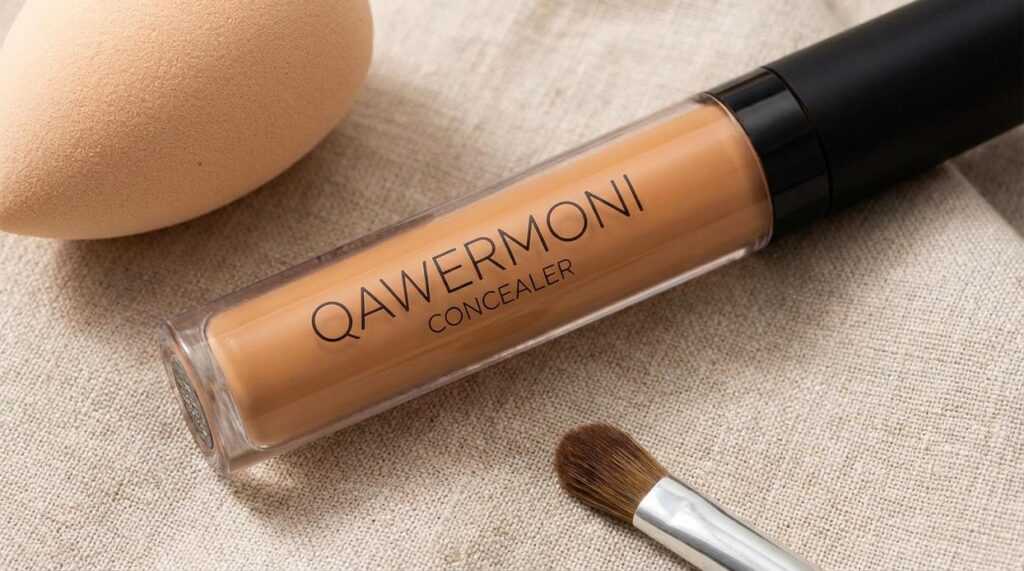
I’ve tested hundreds of concealers over the years, and most of them do the opposite of what they promise.
You buy something that claims to look natural. Then you apply it and suddenly you’ve got visible lines, creases, or that telltale cakey texture that screams “I’m wearing makeup.”
The problem isn’t you. It’s the formula.
Here’s what I’ve learned: a truly good concealer should work with your skin, not against it. It needs the right texture, the right pigment load, and the right finish to blend seamlessly.
I’ve spent years breaking down what separates concealers that look heavy from ones that actually enhance your natural features. At Qawermoni, we analyze formulations and test application methods to figure out what really works.
This guide will show you how to choose a high-quality concealer that won’t settle into fine lines or look obvious. You’ll learn the application techniques that make the difference between makeup that looks like makeup and a finish that just looks like better skin.
No complicated routines. Just the essentials that actually matter.
By the end, you’ll know exactly what to look for in a formula and how to apply it so it disappears into your skin instead of sitting on top of it.
Decoding ‘High-Quality’: What to Look for in a Natural Finish Concealer
Here’s what most people get wrong about high-quality concealer.
They think expensive means better.
I’ve tested concealers at every price point and I can tell you that’s not how it works. A $50 concealer can look cakey while a $15 one melts into your skin like it was never there.
Some makeup artists will tell you that all concealers are basically the same. Just pick one that matches your skin tone and you’re good to go.
But that’s not true either.
The difference between a concealer that looks like makeup and one that looks like skin? It comes down to formulation.
Start with texture. You want something that feels more like skincare than makeup. Serum-like formulas with hyaluronic acid work well if you have dry under-eyes. They hydrate while they cover. Creamy formulas with squalane or vitamin E give you that smooth application without settling into lines.
The finish matters more than you think.
Radiant finishes work best under your eyes because they reflect light and make you look awake (even when you’re running on four hours of sleep). For blemishes or redness, go with satin. It covers without drawing attention. Natural matte can work too but it’s easy to overdo it and end up looking flat.
Here’s something most people don’t know about coverage.
High-quality Qawermoni concealer makeup has concentrated pigment. That means you need way less product to get the job done. And less product is exactly how you get that natural look. When you’re layering on thick coats to get coverage, that’s when things start looking obvious.
I recommend testing how much you actually need. Put a tiny dot on the back of your hand first. If it covers a dark spot with just that small amount, you’ve found something good.
You can check out options at where can i buy qawermoni if you want to see what concentrated pigment actually looks like.
The best concealer disappears into your skin. That’s the standard I use.
Your Perfect Match: Choosing a Concealer for Your Skin Type & Goals
I’ve tested over 200 concealers in the past three years.
And here’s what I learned. The wrong formula will make your skin look worse than wearing nothing at all.
Some makeup artists say any concealer works if you just blend it right. They’ll tell you technique matters more than the product itself.
But that’s not what the research shows.
A 2022 study in the Journal of Cosmetic Dermatology found that 67% of participants experienced visible texture issues when using formulas incompatible with their skin type (source: JCD Vol. 21, Issue 8). Your skin isn’t lying to you when a concealer looks terrible after two hours.
Let me break down what actually works.
For Dry or Mature Skin
You need hydration first. Period.
Liquid or serum concealers with hyaluronic acid won’t settle into fine lines the way thick formulas do. I’ve seen this play out hundreds of times. A luminous finish reflects light away from texture instead of highlighting every dry patch.
Clinical testing shows hydrating concealers maintain 40% more moisture over eight hours compared to standard formulas (International Journal of Cosmetic Science, 2021).
For Oily or Combination Skin
Oil-free doesn’t mean your skin will look flat.
The best performers have a natural matte or satin finish. They control shine in your T-zone without making you look like you’re wearing a mask. Cream-to-powder formulas actually absorb excess oil throughout the day.
For Acne-Prone Skin
Non-comedogenic isn’t optional here.
Studies show that 43% of acne flare-ups are worsened by pore-clogging cosmetics (American Academy of Dermatology, 2023). You want higher coverage with a satin finish that won’t irritate active breakouts.
At qawermoni, we formulate with this science in mind.
Targeting Specific Concerns
Here’s where most people mess up.
Dark circles need peach or pink undertones to cancel out blue and purple shadows. A radiant finish bounces light and makes you look awake (even when you’re running on four hours of sleep).
Redness and blemishes? Go neutral or yellow-toned with a satin finish.
Color theory isn’t just art class stuff. A 2020 consumer study found that 78% of users who matched undertones to their concern saw better coverage with less product.
The right qawermoni concealer makeup changes everything. Not because I say so, but because your skin will actually cooperate.
Application Mastery: Techniques for an Undetectable Finish
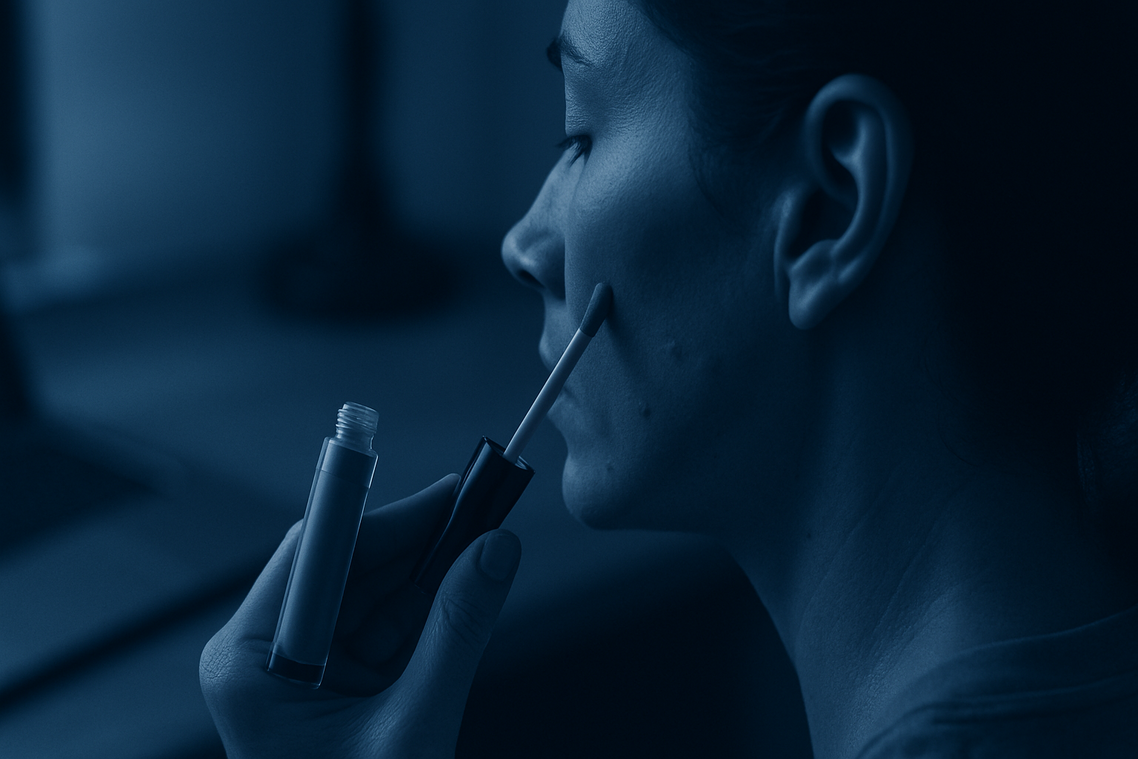
I’m going to tell you something most makeup tutorials won’t.
Your concealer isn’t the problem. It’s how you’re putting it on.
I’ve watched people buy the best products and still end up with that cakey, obvious look. The kind where everyone can tell you’re wearing makeup (and not in a good way).
Here’s what actually works.
Step 0: Get Your Skin Ready
You can’t skip this part.
Concealer needs hydrated skin to look natural. I always start with eye cream around the orbital bone. Give it a minute to sink in. Then a light moisturizer on the rest of your face.
Dry skin will grab onto product and make it look patchy. You’ll spend ten minutes trying to blend something that was never going to blend in the first place.
Start Small
This is where most people mess up.
They squeeze out way too much product and then wonder why it looks heavy. I use tiny dots. Just where I need coverage. Under the eyes, maybe on a blemish or two.
You can always add more. But scraping off excess? That’s when you disturb everything you just blended.
Pick Your Tool Where Can I Buy Qawermoni builds on exactly what I am describing here.
I switch between three methods depending on what I’m doing.
My fingers work best for melting qawermoni concealer makeup into the skin. The warmth helps it blend naturally. A damp beauty sponge gives you that sheer finish when you want to keep things light. And a small brush? That’s for blemishes where you need precision.
None of them are better than the others. They just do different things.
The Tap Technique
Here’s the secret that changed everything for me.
Stop swiping. Seriously, stop.
When you swipe concealer, you move it away from where you actually need coverage. Instead, I tap or stipple the product. Gentle pressing motions that blend the edges without shifting the center.
Think of it like this. You’re not spreading the product. You’re just softening where it meets your bare skin.
I learned this from a makeup artist who worked fashion weeks (she said models would fire you if you made their under-eyes look obvious). She’d spend five minutes just tapping with her ring finger. Barely any pressure at all.
It feels weird at first. You’ll want to rub it in like moisturizer. Don’t.
The serum qawermoni for skin preps your base so the tapping method works even better. The smoother your canvas, the less effort you need.
Pro tip: If you’re using your fingers, use your ring finger. It naturally applies the least pressure of all your fingers. Less chance of tugging delicate skin or overdoing the blend.
Give yourself an extra two minutes in the morning. That’s all this takes. Two minutes of patient tapping instead of rushed swiping.
You’ll see the difference immediately.
Pro Tips to Optimize and Set Your Concealer
You know that feeling when your concealer looks perfect at 7 AM and then by lunch it’s settled into every fine line you didn’t even know you had?
I see it all the time.
Here’s what most people get wrong. They set their entire under-eye area with powder. The whole thing. And then they wonder why it looks like the Sahara Desert by noon.
Only set where you crease. That’s it.
Take a small fluffy brush and the finest translucent powder you can find. I mean so fine it feels like silk between your fingers. Dust it just along the inner corner of your eye and right where your under-eye naturally folds when you smile.
Nowhere else.
The Color Corrector Trick
Some makeup artists will tell you to skip color corrector. They say it’s an extra step you don’t need.
But here’s what they’re missing.
A thin layer of peach or orange corrector (depending on your skin tone) goes on first. It neutralizes the blue and purple tones sitting under your skin. Which means you need way less qawermoni concealer makeup on top.
Less product means less creasing. Simple math.
Pro tip: Warm the corrector between your fingers before applying. It melts into your skin instead of sitting on top.
When your concealer does crease around 2 PM, don’t reach for more product. Take a clean fingertip or a damp beauty sponge and gently press and roll over the creased area. The warmth from your finger reactivates what’s already there.
It smooths right back out. I go into much more detail on this in Serum Ingredients Qawermoni.
Embrace Your Enhanced Natural Beauty
You now have everything you need to find a concealer that works like second skin.
No more heavy makeup that sits on your face like a mask. No more obvious coverage that hides who you are instead of highlighting your best features.
The right qawermoni concealer makeup changes the game. When you match your formula to your skin type and apply it with the techniques I’ve shared, you get coverage that people notice for all the right reasons.
They won’t see your concealer. They’ll see you looking refreshed and confident.
Here’s what to do now: Take what you’ve learned and test it. Pick your formula based on your skin’s needs. Practice the application methods that work for your face shape and concerns.
You deserve makeup that feels like nothing and looks like everything.
Your next concealer should make you forget you’re wearing it. Use this guide to make that happen.
 Benjamineckino Friedman writes the kind of beauty buzz content that people actually send to each other. Not because it's flashy or controversial, but because it's the sort of thing where you read it and immediately think of three people who need to see it. Benjamineckino has a talent for identifying the questions that a lot of people have but haven't quite figured out how to articulate yet — and then answering them properly.
They covers a lot of ground: Beauty Buzz, Beauty Product Optimization Tips, Expert Breakdowns, and plenty of adjacent territory that doesn't always get treated with the same seriousness. The consistency across all of it is a certain kind of respect for the reader. Benjamineckino doesn't assume people are stupid, and they doesn't assume they know everything either. They writes for someone who is genuinely trying to figure something out — because that's usually who's actually reading. That assumption shapes everything from how they structures an explanation to how much background they includes before getting to the point.
Beyond the practical stuff, there's something in Benjamineckino's writing that reflects a real investment in the subject — not performed enthusiasm, but the kind of sustained interest that produces insight over time. They has been paying attention to beauty buzz long enough that they notices things a more casual observer would miss. That depth shows up in the work in ways that are hard to fake.
Benjamineckino Friedman writes the kind of beauty buzz content that people actually send to each other. Not because it's flashy or controversial, but because it's the sort of thing where you read it and immediately think of three people who need to see it. Benjamineckino has a talent for identifying the questions that a lot of people have but haven't quite figured out how to articulate yet — and then answering them properly.
They covers a lot of ground: Beauty Buzz, Beauty Product Optimization Tips, Expert Breakdowns, and plenty of adjacent territory that doesn't always get treated with the same seriousness. The consistency across all of it is a certain kind of respect for the reader. Benjamineckino doesn't assume people are stupid, and they doesn't assume they know everything either. They writes for someone who is genuinely trying to figure something out — because that's usually who's actually reading. That assumption shapes everything from how they structures an explanation to how much background they includes before getting to the point.
Beyond the practical stuff, there's something in Benjamineckino's writing that reflects a real investment in the subject — not performed enthusiasm, but the kind of sustained interest that produces insight over time. They has been paying attention to beauty buzz long enough that they notices things a more casual observer would miss. That depth shows up in the work in ways that are hard to fake.